Home of the ‘Devil’s Chimney’ in the Cotswolds declared latest National Nature Reserve by Natural England
- Cheltenham Escarpment, known locally as Leckhampton Hill and Charlton Kings Common, declared the 15th site in the King’s Series of National Nature Reserves (NNRs)
- Reserve contains exceptional Jurassic geology and iconic ‘Devil’s Chimney’ landmark, a limestone pillar left standing by quarry workers
- Visitors can enjoy panoramic views and spot butterflies including the rare Duke of Burgundy
Some of England’s most exceptional inland Jurassic geology has been protected as the Cheltenham Escarpment – the 15th site in the King’s Series of National Nature Reserve (NNRs).
Overlooking the Regency spa town of Cheltenham, England’s newest NNR contains one of the thickest inland sequences of Jurassic limestone, with rocky outcrops revealed by millennia of erosion and, more recently, by extensive quarrying during the nineteenth and early twentieth centuries.
This site and its remarkable shelly fossils have been studied by geologists for nearly 200 years and tell the story of a time around 170 million years ago, when the Cheltenham area lay beneath a warm, shallow subtropical sea. This marine environment stretched from the Dorset coast up through central England and into Yorkshire. Today it connects the Cheltenham Escarpment NNR with limestone landscapes found across large parts of England.
This distinctive geology underpins nationally important limestone grassland and wildlife including wildflowers such as purple milk-vetch, musk orchid and fly orchid and 33 recorded butterfly species including the small blue, chalk-hill blue and the rare Duke of Burgundy.
Owned and managed by Cheltenham Borough Council, the reserve contains the iconic ‘Devil’s Chimney’ landmark, a limestone pillar thought to be left standing by quarry workers, though according to local legend it was constructed by the Devil who would sit on top of it and throw stones at Sunday churchgoers.
The honey-coloured limestone found at the site was quarried extensively for centuries for the buildings that are so characteristic of Cheltenham and the surrounding Cotswolds villages.
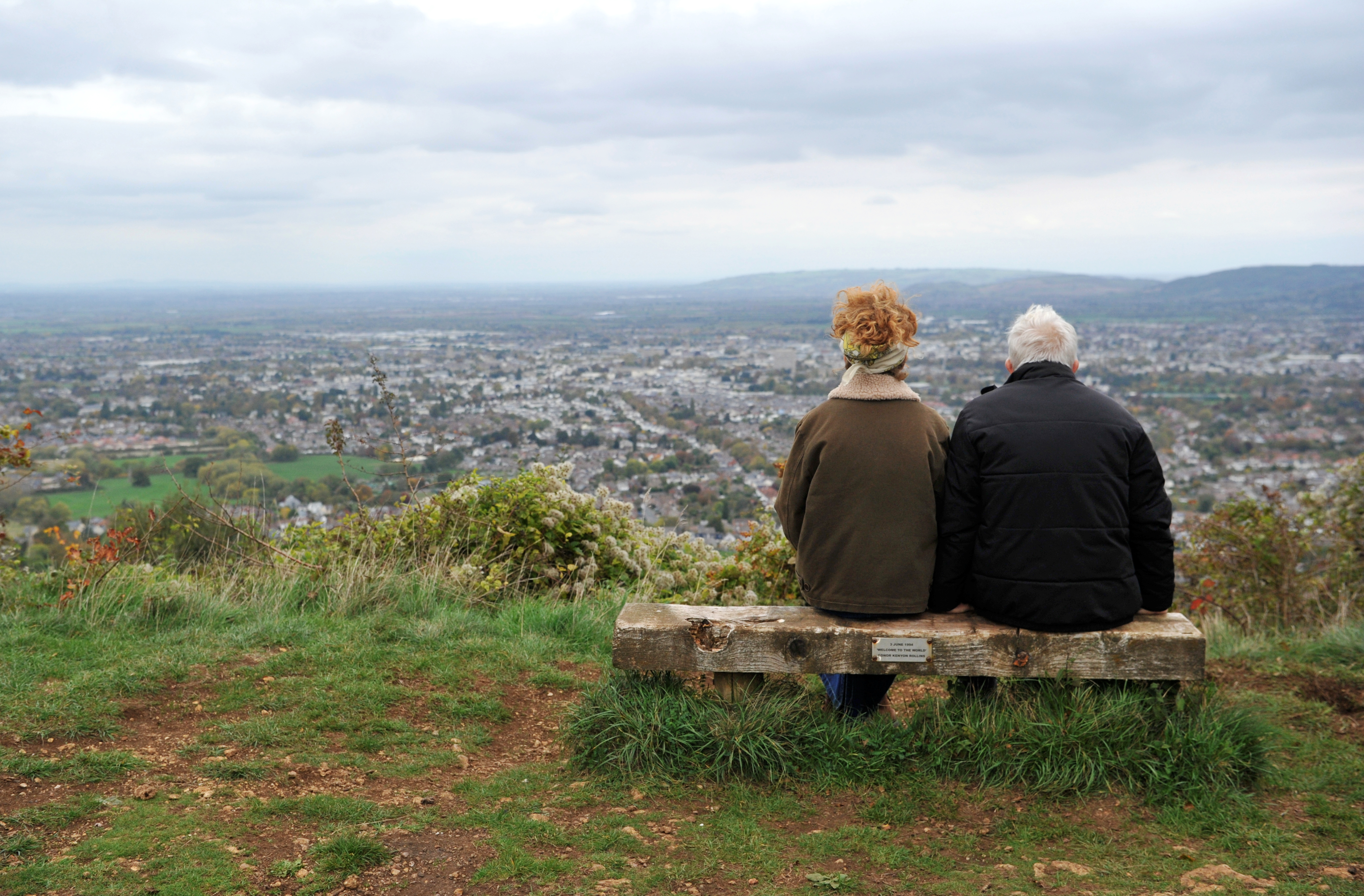
The 60-hectare reserve today attracts thousands of visitors each year thanks to its proximity to Cheltenham and its position on the Cotswold Way National Trail, and its panoramic views across Cheltenham, Gloucester, the Severn Vale and the distant hills of Wales.
This new reserve exemplifies landscape‑scale, integrated nature recovery and will provide an important ecological bridge for species moving along the western edge of the Cotswolds.
This declaration will further raise awareness of the rocks beneath our feet, strengthen the site’s protection and management, and help more people and local communities better connect with and benefit from nature.
Tony Juniper CBE, Chair of Natural England, said: "The Cheltenham Escarpment is a remarkable landscape, where Jurassic geology underpins some of England's finest limestone grasslands and wildlife.
“This designation strengthens protection for our unique geological diversity and its precious habitats, creates a bigger and better-connected space for nature recovery, and offers thousands of people the chance to explore it."
The mayor of Cheltenham, Cllr Martin Horwood, said: “As mayor of Cheltenham and a Leckhampton resident and councillor myself, I could not be prouder to see the reserve at Leckhampton Hill recognised as part of the King’s Series of National Nature Reserves.
“There is a unique blend of beauty, history, nature and geology here that has inspired love and poetry and protest, art and education. Cheltenham Borough Council is the reserve's custodian now and absolutely committed to its future for people and for nature. The reserve now plays a vital role in nature recovery and offers thousands of residents and visitors the chance to connect with history and nature on our doorstep.
“The status of a National Nature Reserve will help protect and celebrate the hill and the escarpment for future generations, while strengthening Cheltenham’s reputation as a town where nature, wellbeing and heritage are deeply valued.”
Cllr Steve Harvey, cabinet member for parks, green spaces, waste and recycling, said: “I am particularly proud of the work done on Leckhampton Hill to improve accessibility which means more people than ever have the opportunity to access this wonderful place. Thanks to significant investment and the support of a wide range of partners, approx. £100,000 has been invested in recent years meaning we now have more than three kilometres of accessible pathways across the site, opening-up areas that were previously difficult for many people to reach.
“For example, the recent completion of the link between National Star College and Leckhampton Hill is a particularly important milestone. It means wheelchair users can now travel through a much larger section of this special landscape, from Crickley Hill through to National Star College and onwards to Leckhampton Hill.
“Improving accessibility is about removing barriers and creating opportunities for more people to connect with nature, exercise outdoors and experience the wellbeing benefits that our countryside provides."
Dr John Harvey, representing The Friends of Leckhampton Hill (FOLK), said: “This declaration has two important purposes. It recognises the national importance of both the unique geological features found here and the wildlife of the formerly widespread limestone grassland. It also celebrates the role of volunteers in safeguarding the site and in contributing to its day-to-day management.
“FOLK has played a key role in these activities, but has relied heavily on the support of many local individuals and councils. FOLK’s input has ranged widely, for example including specialist advice, very many hours of physical labour, helping with visits by parties of school children, raising money to fund works, providing a sounding board for discussion of management proposals and public concerns, and much more.
“A major motivation for all this work has been to maintain the hill and the common as special places that can be appreciated and enjoyed by both visitors and those who see it from a distance.”
For press enquiries contact: communications team at communications@cheltenham.gov.uk or telephone 01242 264231.
Notes to editors
The King’s Series
· NNR status is awarded to the very best nature conservation sites in England and recognises land that is nationally important and managed in perpetuity for its wildlife and geology. This status helps protect some of the country’s most important habitats, species and geological features, while also enhancing biodiversity and nature recovery and connecting people with nature.
· Natural England is currently leading a five‑year programme to declare 25 new NNRs in recognition of the coronation of His Majesty King Charles III and his long‑standing interest in the environment. This initiative, known as the King’s Series of National Nature Reserves, involves the declaration of five new reserves each year between 2023 and 2028. Cheltenham Escarpment is the fifteenth site designated within the King’s Series.
· The King’s Series of National Nature Reserves provides an opportunity to tell England’s geological story through the NNR network, with each site representing a different chapter in Earth’s history. The designation of Cheltenham Escarpment NNR, which completes the Middle Jurassic chapter, represents another step towards the ambition to showcase the full geological story – from our 635‑million‑year‑old Precambrian origins at Bradgate Park and Swithland Wood NNR to the modern coastal dynamics of the Lincolnshire Coronation Coast NNR.
Accessibility and partnership funding
· The site now has more than 3km of accessible paths. The main route follows the full length of the Cotswold Way through the site, with a secondary track linking to and from the top (Brownstones) car park.
· This network has been delivered through several grants (approx. £100k), in collaboration with a number of partners, including Cotswolds National Landscape (Removing Barriers 2024/25 and Access for All 2022/23 funding), National Grid, National Highways (Connecting Parishes Fund – A417 link), Disabled Ramblers, FOLK and the Cotswold Way Association.
Recent News
- Councils confirm revised timetable for Strategic and Local Plan
- Cheltenham Borough Council urges local residents to fight fly-tipping
- Joint statement from Gloucester City Council and Cheltenham Borough Council
- Allotment Awards 2026 winners
- New drop-in sessions and office location changes for tenants
- Cheltenham joins countywide partnership to explore community renewable energy opportunities
- Homes to take root on Cheltenham's old council nursery
- Christmas magic in Cheltenham with new festive projection, markets, free parking and late-night shopping